
Home › Forums › Horse Racing › Racehorse colour
- This topic has 10 replies, 7 voices, and was last updated 12 years, 7 months ago by
 Drone.

- AuthorPosts
- October 31, 2013 at 11:39 #25011
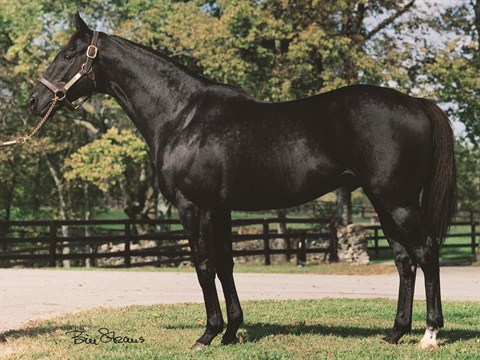
Why are so few horses being registered brown or black these days, even if they are those colours?
October 31, 2013 at 20:49 #456822The Fugue is down as brown. Perhaps the fashion is for all dark horses to be liver chestnuts now?
October 31, 2013 at 21:23 #456828Think they are all called dark bay. there do seem to be less dark horses about. I do love a brown or black.
Just I was looking through a 1960s stallion register & so many were listed as browns. Must only be a handful so called at stud today.October 31, 2013 at 21:51 #456839The US Jockey Club registers these horses as "Dark Bay/Brown" since they are often difficult to tell apart, especially at a young age. Some horses registered as dk b/brn are actually black but rust out in the sun.
Halo and Devil His Due were/are true black horses registered as dk b/brn.
http://4.bp.blogspot.com/-4OHtojBGUWk/T … 0/halo.jpg
http://i.bloodhorse.com/sroimages//medi … 6337_1.jpg
Zenyatta is brown.
http://i8.photobucket.com/albums/a37/si … 3455PM.pngOctober 31, 2013 at 23:41 #456852Was Sunday Silence black?
November 1, 2013 at 20:15 #456928Was Sunday Silence black?
Yes.
November 1, 2013 at 21:41 #456958Why are so few horses being registered brown or black these days, even if they are those colours?
Perhaps it’s because vets are more often involved at the birth and registration of thoroughbred foals than in previous times. When most of these vets were trained, they will have been introduced to the concept that, genetically, there were two basic skin/hair types in equines; red (chestnut) and non-red (bay), which depended on which allele was represented in the relevant gene and whether the gene was active. There are many other alleles in other genes that modify the base colour into the myriad of hues present in the equine population. Even the grey horses were either grey-chestnuts or grey-bays. I think genetic knowledge has moved on a bit since then, but many people cling to the view that chestnut and bays are the two base colour-types. Maybe at foaling it is easier to separate them into the two broad groups than worry about just how dark brown a foal must be for it to be classified as black. Maybe it doesn’t matter as much as it used to, because of all the new technological methods (digital photography, whorls, teeth, mouth, DNA, chips, etc) to identify individual horses compared to the days of a written description, when a more precise categorization of the colour was needed.
November 2, 2013 at 10:19 #457017Good post.
I have read that some studs consider Black as an unlucky colour, & that is often cited as a reason why black horses are registered bay or brown.
There don’t seem to be as many brown stallions at stud though, in the 1950 Stallion Register the ratio is much higher than today.November 2, 2013 at 10:35 #457020I’ve always understood that a bay was a brown horse with a black mane and tail?
I've stumbled on the side of twelve misty mountains
I've walked and I crawled on six crooked highwaysNovember 2, 2013 at 16:13 #457104The thoroughbred has two base colours, black and chestnut.
Most black thoroughbreds appear brown or bay because of the actions of other genes that "lighten" or "brown" the coat, from memory it’s the agouti gene which turns black into bay.
Bay/brown/black is dominant, chestnut recessive (hence a bay/brown/black horse has to have at least one parent of that colour).
White markings are derived from the action of the sabino gene, which seems to operate more dramatically on chestnut.
Grey is a separate gene which overlays the base colour. Grey is dominant, non-grey recessive.
November 3, 2013 at 09:27 #457163That fabulous slowcoach Killeshin – ‘who regarded the Grand National as a namby-pamby sprint’ * – was a black (bl.g)
* c. Alastair Down
- AuthorPosts



- You must be logged in to reply to this topic.