
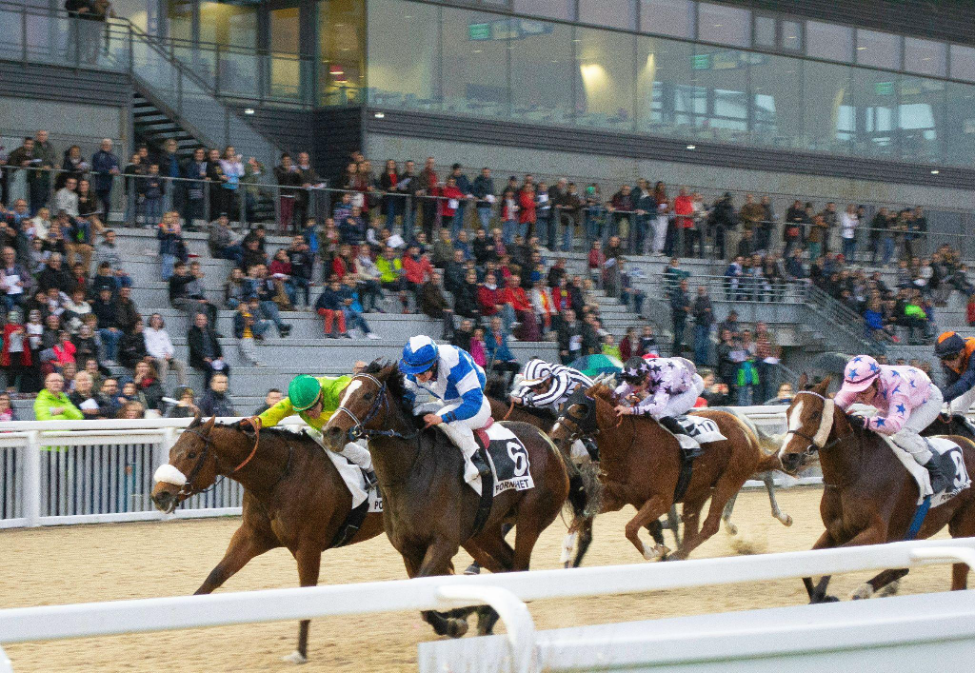
There was a time when following a race away from the course meant watching the television pictures, listening to the commentary, and waiting for the result to be confirmed. Much of the interpretation came afterwards, once viewers had seen a replay or opened the following day’s paper.
The pictures remain the most important part of the experience, but they are no longer the only source of information. Going updates, market moves, non-runners, live timing, and sectional data can now reach a viewer’s screen before the horses have returned to the unsaddling enclosure.
That has made following racing from home more informative. It has not necessarily made every race easier to understand.
More Information Before the Off
The first advantage of live data appears well before a race begins. A late non-runner can alter the shape of a contest, particularly when the withdrawn horse was expected to make the running. A going change may strengthen the case for one runner while raising questions about another.
Market movements add another layer. Seeing a horse shorten noticeably can be useful, but the move does not explain itself. It may reflect significant support, reduced liquidity, or a reaction to another runner drifting. The price is information, not a complete argument.
Racegoers have always combined several clues. What has changed is the speed at which those clues arrive and the number of people who can access them. As we previously explored in its feature on technology changing race-day preparation, data is now influencing trainers, racecourses, and followers of the sport rather than remaining in the hands of a small group of specialists.
What Sectionals Add To The Picture
Sectional times are most useful when they challenge the initial impression of a race. A horse described as finishing strongly may not have accelerated at all; the runners in front could simply have slowed more sharply.
Likewise, a beaten horse may have performed better than its finishing position suggests after helping to force an unsustainable early pace. That information can be valuable when the horse appears again under comparable conditions.
Sectionals still require interpretation. Comparisons must allow for the course, distance, surface, and going. Figures from a steadily run all-weather contest cannot simply be transferred to a strongly run race on soft ground at Ascot.
There is also a danger in watching the numbers rather than the race. A timing graphic cannot fully capture a blocked passage, a jockey changing course or a horse becoming unbalanced. The data works best alongside careful race-watching, not in place of it.
Live Entertainment Across Different Time Zones
Digital coverage has also made racing more international. A British viewer can follow meetings in Ireland, France, Australia, or Hong Kong without leaving home, although the time difference can make the experience very different from watching a Saturday card in Britain.
The same appetite for real-time entertainment appears elsewhere online. Someone in Canada moving between a race stream and alive casino will find that both experiences depend on a stable broadcast, clearly displayed information, and events unfolding without a long delay. The activities are different, but the sense of immediacy is central to each.
That immediacy explains much of the appeal. Viewers are no longer merely waiting for a final result. They are following changes as they happen and forming opinions throughout the event.
Fast Information Is Not Final Information
Speed brings one obvious complication: the first update is not always the last.
A provisional result can change after a stewards’ enquiry. Distances may be corrected, sectional figures can be revised, and the explanation for a poor run may emerge only after connections have spoken. Anyone assessing a performance immediately after the race should therefore leave room for the evidence to change.
The technology behind this constant flow is more complicated than it appears on screen. Amazon Web Services’ explanation of how organisations store and stream sports-data feeds shows how updates can be processed and delivered to users in near real time. For the viewer, however, the best system is usually the one that supplies useful information without distracting from the contest.
Live data has not removed the uncertainty that makes racing compelling. Horses can miss the break, races can develop unexpectedly, and even the strongest reading of the available evidence can be wrong.
What the technology has done is give followers more ways to understand how a race unfolded. The skill now lies in knowing which numbers add to the story—and when it is better simply to watch the horses.